People Management Training for Shop Floor Supervisors in Pune: Nexteer
On 23 November 2026 I ran Day 2 of Take the Wheel, a people management programme for Nexteer's shop floor supervisors in Pune. Here is what we worked on and why it matters on the line.
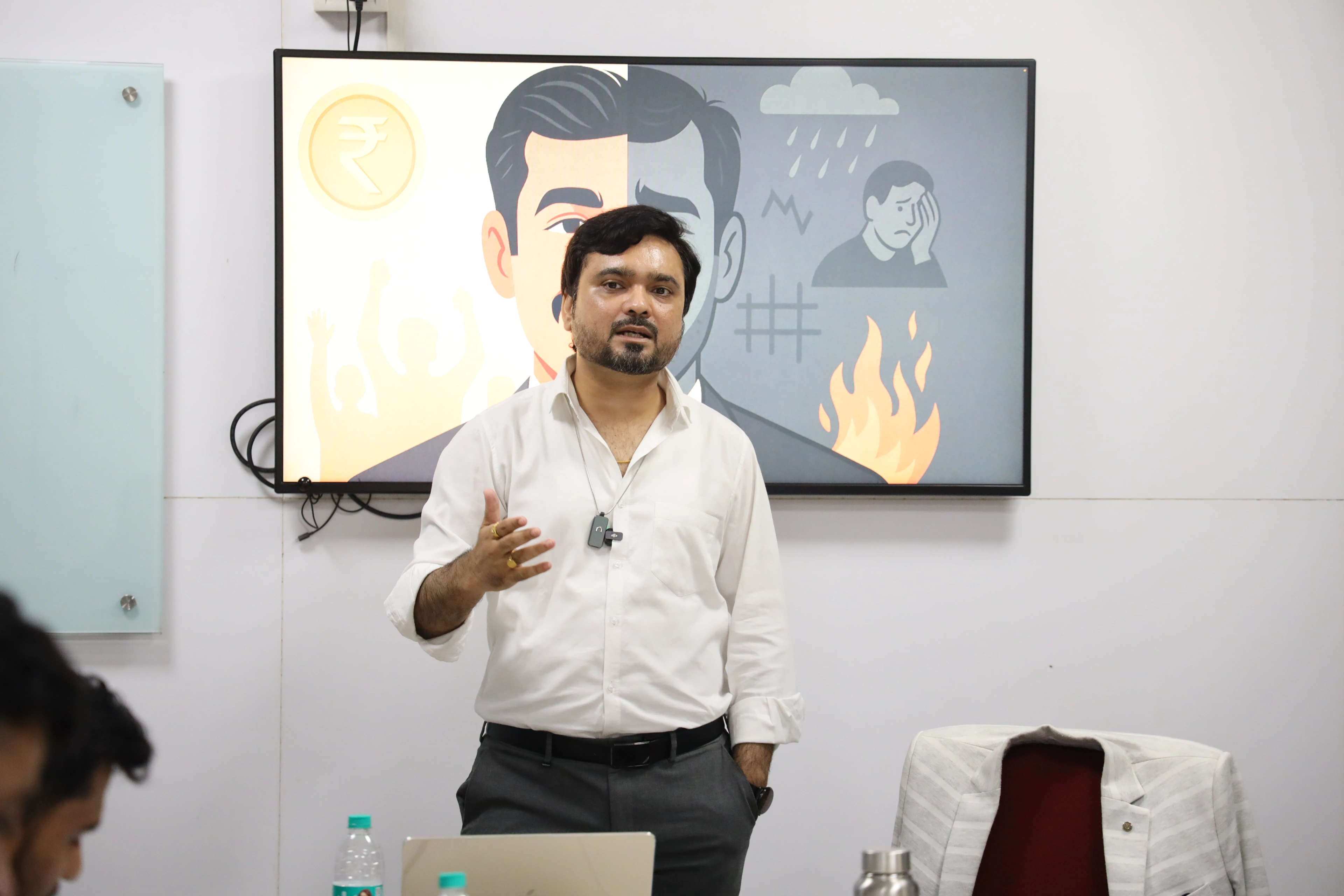
On Monday, 23 November 2026, I ran a full day of people management training for shop floor supervisors and team leaders at Nexteer Automotive's plant in Pune. It was Day 2 of Take the Wheel, an eight-day programme for the people who run Nexteer's lines and shifts. Ten leaders were in the room, and we worked in Hindi and Marathi with the English terms kept as they are. Below is what we worked on, why it matters on a shop floor, and what any plant team can use from it.
Why shop floor supervisors need people management training
Nexteer makes steering and driveline systems. On a line like that, the process gets a lot of attention, and it should. But a supervisor also works with people all day, from the team under him to the boss above him.
Take the Wheel runs one day a month, from October 2026 to May 2027. A quality specialist takes the technical days, which cover quality tools and lean methods for the line. My days are about people. The two go together. A supervisor who knows the tools but cannot handle his team will still struggle on the floor.
I told the group that a training day is like a refresh button. Every day you come, you work, you go home. Once in a while you need a day to stop and think about how you are doing it.
Starting the day with self-awareness
We began with a short reflex game in pairs. It wakes the room up. It also makes a point I came back to all day: the more aware you are of yourself in the moment, the faster you react.
Then each person filled in his self-awareness tracker: how he felt and what he was thinking at that moment. He filled it again after lunch. If you ask yourself how you feel and cannot write anything, that is the first thing to work on. I used the example of MS Dhoni, whom we call Captain Cool. Calm like that starts with knowing what is going on inside you.
The Winning Kite: what success means for a supervisor
We first went back over Day 1: defects and process, cost of quality, the producer's view against the customer's view, and PDCA. On a journey of eight days, nobody should lose what came before.
The people days of Take the Wheel are built on my model, the Winning Kite. Our careers are like a kite. The higher it flies, the more successful we are. At the top corner is SQ, which stands for success. We get there by keeping the other three sides in balance: EQ, RQ and PQ. I put it to the supervisors in simple words. EQ is managing yourself. RQ is managing people. PQ is managing work.
I asked them what success means to them. The answers came quickly: meeting targets, a promotion, a better salary, a house of their own, getting married. All of these are linked. The promotion brings the house closer. Then I added one more. Success is also when the people around you start to see you as a role model. And when you describe that role model, do not stop at "he works hard". Star leaders never talk in general terms. Say what exactly he does that makes people trust him.
We looked at three people I have come across in my work:
- A man everyone liked. Even his vendors put his photo on their WhatsApp status on his birthday. But he did not get the work done, and after a point his bosses said they had given him every chance.
- A woman with very good results who was promoted to run an office. Every few months her temper would take over, and the office would go into trouble again.
- A quiet man with very strong output who kept to himself. His line was "my work will speak one day". It does not. After a certain level, if the company does not know you, you stay behind.
Each of them had one weak side, and that one side held the whole kite down.
Sorting shop floor skills into the three sides of the kite
Next we sorted everyday skills into the three sides. Six sigma, a to-do list and getting things done belong to PQ. Time management is a PQ skill too. But if a person has learned time management and still cannot manage his time, the problem sits in EQ. Most of what is written in a job description is PQ. What is hidden outside it is RQ and EQ.
RQ in one phrase is people management. Big companies now have a Chief People Officer for exactly this reason. I asked the group what a good people manager needs, and their answers were good: communication, helping others, motivating others. One supervisor said you have to understand the other person. That is empathy, which I write about in understanding others. When you coach your team and give them chances to grow, that is developing others, and it builds your RQ on its own.
While we went over the last session, one supervisor summed it up in Hindi. In English it comes to this: we are the next generation of leaders. Whatever a junior says, even if he is angry about something in production, we have to listen to him.
Technical problems get solved, people problems repeat
Problems never end, at home or at work. Technical problems keep coming, and they get solved. The problems that keep coming back are usually about people and behaviour. The smartest leaders are the ones who do not let the same problem come twice. When it comes once, they go to the root cause so that at least this one does not return.
Emotional awareness and self-control under pressure
A trigger is a person, an event or a situation that changes how you feel. You leave home and get a message that your EMI is due today. You reach the shop floor and see a face that puts you off for the day. Your boss shouts at you for a mistake that was not yours. A person's real behaviour does not show on a normal day. It shows when the triggers come.
Emotional awareness and self-control work as a pair. Some people know they are angry and still cannot hold it. Awareness is there, control is not. But when you see a person in control, awareness is always there with it. I showed the group two well-known moments from world sport where great players lost their temper on the biggest stage. Then we talked about why it happens at that one moment and not in the hundred matches before.
Then I told them a story about an office. A team lead who is usually cheerful has a terrible morning, with a fight at home and then no parking at the office. A new intern greets her with a big "Good morning, ma'am" and gets a cold "hmm" back. The intern sits down worried, and the older colleague at the next desk tells her the lead is always like that. Half an hour later the lead is fine again. But the intern's view of her has already formed, and she has fallen into the wrong company at the very start of her career.
A team is a reflection of its leader. At work we do not choose our team, it is given to us. In a gully cricket match you pick your own side. The real test of a leader is the team he is given. When your boss gives you some feedback, you can decide he is rude and close your ears, or you can decide there is something to improve. Two roads open from that one moment. Success is not a surprise. Where you are today is the result of many such small responses.
Each person then wrote down the hardest triggers from his last month and how he really reacted, not how he wishes he had. The point is in one line: triggers come, but they do not decide for me. I decide my response. For more, read my posts on emotional awareness and on staying in control under pressure.
How the body and the mind move your emotions
You wake up with back pain. The first thought is to take leave today. Then the mood drops. A hit on the body shows up in the mind and in the emotions. It works the other way too. If your mindset becomes "this company is useless" or "he never listens to me", the anger follows, and soon you come to work feeling lazy and low. A training day gives you the awareness. The control comes only with practice.
Scoring your own kite, honestly
Each supervisor then gave himself a score on each side of the kite and wrote down his weakest side. I asked them to be strict. If you feel like giving yourself seven, give less. What cannot be measured cannot be grown, and a person who pampers himself in his own scores does not improve.
EQ is not only about anger. Loyalty, keeping your word, following the rules, the hunger to win, commitment to a deadline and optimism are all part of it. RQ includes your network outside the office as well. A long contact list is not the point. A few strong contacts you can call when you need direction are worth more.
A few quiet minutes of looking at yourself followed. Learning hurts. A stone becomes an idol only under the hammer and the chisel. If you keep taking the same actions, you will keep getting the same results, so the actions have to change.
We also spoke about listening. Think of the friend you like the most. Most likely he is the one who listens to you. Listening is a skill, and on a shop floor it is often worth more than talking. My post on active listening goes further into this.
The tower activity: leading a team you did not choose
After lunch I formed three teams myself, the way teams are given at work. Each team built a tower with a small set of material. Before they started, I gave the three captains a short brief on how to lead.
I asked them for four things. Plan before you start. Involve everyone, so nobody sits on the side. Ask for ideas from all and lead democratically, not by order. And hand out the work properly. In a cricket team you have openers, finishers, a wicket keeper and different kinds of bowlers. On a shop floor, too, no two people have the same strengths, and a good supervisor gives each one the work that suits him. I have written about this in effective delegation. I also asked each captain to watch his members while they worked: who was active, and what each one was good at.
The last part of the day moved to accurate self-assessment and the blind spots each of us has, which others can see and we cannot.
What comes next for the Nexteer team
Day 3, on 7 December, is with the quality specialist on quality basics and the 7 QC tools. On the people side, I have promised the group a separate workbook on the qualities that make up EQ. By Day 8 I want every one of them to be able to name these qualities without looking, and to say which ones he sees in the people around him.
My thanks to the Nexteer training team for arranging the day, and to every supervisor for being so open. If you lead a sales team, you may like my notes from a day of EQ training with a sales team in Pune.
Want a day like this for your team?
If your supervisors and line leaders need a day like this, at your plant and in the language your team speaks, I would be glad to talk. My number is 87936 30001, or you can send me a message. There is more about the training I do for companies in Pune, and the full list of signature programmes is on the site.
Questions people ask
What is people management training for shop floor supervisors?
It helps supervisors and team leaders handle the people side of the line. That covers their own reactions under pressure, how they treat and listen to juniors, and how they hand out work. At Nexteer the day used the Winning Kite, real situations from the floor, a trigger exercise, an honest self-score and a team tower activity.
How long is the Take the Wheel programme?
Take the Wheel runs for eight days, one day a month, from October 2026 to May 2027. I take the people days, and a quality specialist takes the technical days on quality tools and lean methods.
Can you run the training at our plant in Pune?
Yes. Every Nexteer day so far has been on site at their plant in Pune. I need a training room with a screen, and some open floor for the group activities.
Can the training be in Hindi or Marathi?
I teach in the language the team is most at ease in. For Nexteer that was Hindi and Marathi, with the English terms left as they are. English works just as well.
Who is Avinash Chate?
I founded The Future Corporate, and I have trained working professionals since 2014. The Winning Kite, the model behind this programme, is from my book Stars at India Inc.
The Winning Kite © Avinash Chate, Stars at India Inc.
Related Articles by Avinash Chate
- How to Diversify Your Career: Motherson's 3CX10 Rule Explained
- Mastering Decision-Making: Better Calls Under Uncertainty
- Retail Training Outlet During Pandemic: The Change Curve in Action
Work with Avinash Chate
- Best Motivational Speaker in Maharashtra →
- Motivational Speaking for Corporate Events →
- Best Motivational Speaker in Pune →
| AC | Avinash ChateIndia's Leading Corporate Trainer | TEDx Speaker | Author With 1000+ organizations trained including RBI, JSW Steels, and Ferrero, Avinash Chate delivers high-impact corporate training across India. Creator of the KITE Leadership Framework and bestselling author of "The Winning Edge." Website YouTube |
Avinash Chate services
Corporate Trainer in Pune · Top Corporate Trainers in Pune · Leadership Trainer in Pune · Top Leadership Trainers in Pune · Motivational Speaker in Pune · Top Motivational Speakers in Maharashtra · All service locations
← Back to all articles · Book Avinash Chate
By Avinash Chate — Maharashtra’s #1 Corporate Trainer & Motivational Speaker. .