Customer Service Training in Dubai
The guest said it twice at the counter. Your team member apologised, said he would check with someone, and never came back — because going back meant telling a supervisor, in front of the shift, that something had gone wrong on his watch. Avinash Chate runs customer service training in Dubai for hospitality, retail, aviation, healthcare and banking teams, delivered in English.
Dubai · Abu Dhabi · Sharjah · India-based, travels for engagements
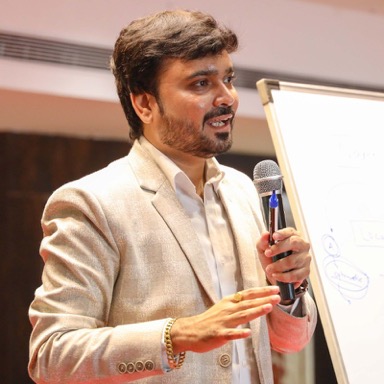
Service Rarely Fails at the First Contact. It Fails at the Second.
Something goes wrong at every counter in the world. The room is not ready, the delivery is late, the file is with someone else, the appointment has slipped by forty minutes. That is not the moment a customer decides about you. The moment is what happens next.
In Dubai that next moment usually crosses a culture gap. The UAE Ministry of Foreign Affairs states that Indians form the largest foreign community in the country, followed by Pakistanis and Bangladeshis, and a Dubai service floor typically mixes South Asian and Filipino staff serving customers from everywhere. What reads as a complete apology to one person reads as an excuse to another. What reads as respectful restraint reads as indifference. Nobody involved is being difficult, and the second contact still goes wrong.
The more expensive failure is the escalation that never happens. A frontline person who believes that raising a problem means confessing a mistake in front of the shift will hold the problem until the customer raises it instead. By then it is not a service issue, it is a complaint. The UAE's consumer protection law — Federal Law No. 15 of 2020, as amended by Federal Decree-Law No. 5 of 2023 — gives the customer a formal route to the Ministry of Economy's consumer protection department once your own route has failed, and the customer who gets that far has already stopped negotiating with you.
Volume is what makes the gap expensive here. Dubai's Department of Economy and Tourism reported 19.59 million international overnight visitors in 2025, staying across more than 154,000 hotel rooms. At that volume a recovery habit that only works sometimes still produces a steady stream of people who go and write the review.
Scripts do not survive the second contact. A greeting can be scripted, because the situation is known in advance. Recovery cannot, because by definition something has already departed from the script. So the question to put to any provider you shortlist is not what the deck contains. Ask what a supervisor does differently on the next shift, and how you would know six weeks later whether it happened.
What the Programme Covers
Every programme is scoped to the service failure you need fixed, but these are the modules UAE organisations ask for most.
Reading the Complaint Behind the Complaint
A customer at a counter rarely states the thing that actually went wrong. He states the last thing that went wrong. Participants practise separating the stated problem from the one that has to be solved, and learn to ask the single question that surfaces it without sounding like an interrogation. See customer service excellence.
Service Recovery Across a Culture Gap
The same sentence lands as an apology, an excuse or a brush-off depending on who is hearing it. The module gets those differences named out loud by a mixed room rather than taught at it, then builds a recovery sequence that works whoever is standing at the counter. See cross-cultural communication.
Escalating Before It Becomes a Complaint
Raising a problem upward is harder when your role, your reporting line and your visa all sit with the person you are about to tell. That is the real constraint on a Dubai frontline, and the module treats it as one rather than lecturing about ownership. Participants practise the actual sentences for escalating early. See difficult conversations.
Handling an Angry Customer Without Absorbing It
Anger at a counter is rarely about the person at the counter, but it is aimed there. Participants practise staying in the conversation while it is loud, reading what is driving the behaviour, and closing without either surrendering the policy or losing the customer. See handling difficult people.
The Supervisor on the Shift
Service standards decay at supervisor level, not at frontline level. A duty manager who responds to a raised problem by asking who is at fault trains the whole shift never to raise one again. This session is run separately for supervisors, on how to receive a problem and what to do in the first two minutes. See frontline supervisor development.
A Service Standard a Mixed Team Can Hold
Most service standards are written for a customer and read by nobody. The closing module turns the programme into a short set of behaviours your own team writes and can recite, with the decision rights stated so the frontline knows what it may resolve alone, using the tools in the KITE Leadership Framework. See customer centricity.
Formats
A one-day workshop on recovery and complaint handling, which is the format most service rosters can absorb. A two-day programme when the objective is a set of behaviours rather than one. A batch series when the population is large and the rooms have to stay small enough for everyone to role-play, usually with supervisors run as their own batch first so they are ready to receive what the frontline starts raising. A staged programme across two visits, with a virtual module between them so the practice has somewhere to land. And a shorter keynote-style session for a service-week launch or a town hall, scoped honestly as awareness rather than sold as a workshop. There is no published rate card, because a half-day session for two hundred people and a four-batch programme with supervisor follow-through are not the same purchase; the quote is built line by line from format, batches, days and the travel and permit costs your side is arranging.
How It Runs Around a Live Service Operation
The scoping call settles the batch plan before anything is written, because a service floor cannot empty itself for a day. Batches are built around the roster rather than the calendar, sized so that every participant runs a recovery role-play out loud, and scheduled in the quiet part of the trading day. Supervisors are trained first and separately, since the frontline session produces people who start escalating early, and a shift that is not ready to receive that goes backwards in a fortnight.
The scenarios come from your own complaint log rather than from a catalogue. That is the part that decides whether the room takes it seriously: a housekeeping team practising a real recurring failure from last quarter behaves differently from a housekeeping team practising a hypothetical one. Anything confidential is used in the room and stays there.
On language, delivery is in English, and English is the room for supervisors, duty managers and the head-office service function. A back-of-house, facilities or contracting batch is sometimes reached better in Hindi, and where that is the case the same facilitator runs the same programme rather than handing the batch to someone else. What does not change between those rooms is the framework or the person standing in front of it, which is what lets a supervisor and a frontline agent six weeks later use the same words for the same behaviour.
The honest boundary. Avinash Chate is based in Maharashtra and travels for engagements. There is no UAE office, no UAE entity and no UAE licence, and no past delivery in the Emirates or Emirati client list is being claimed. What you are engaging is a named facilitator who flies in on a mission work permit your entity sponsors, delivers the programme and flies out. The record behind him is Indian and checkable — 80-plus organisations, 25,541-plus professionals, 202 Google reviews at 4.9 stars, a TEDxBEC talk, and the training evidence register with its public source library.
From the room
Real sessions, photographed as they ran.
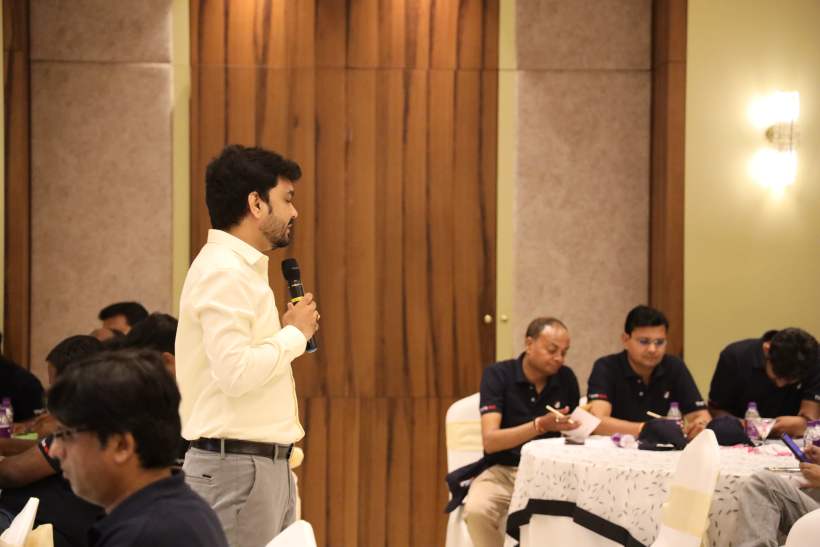
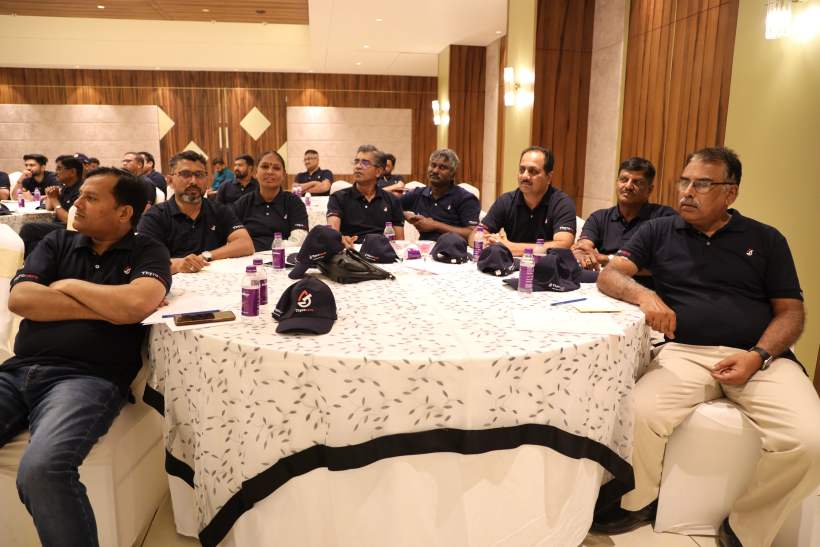

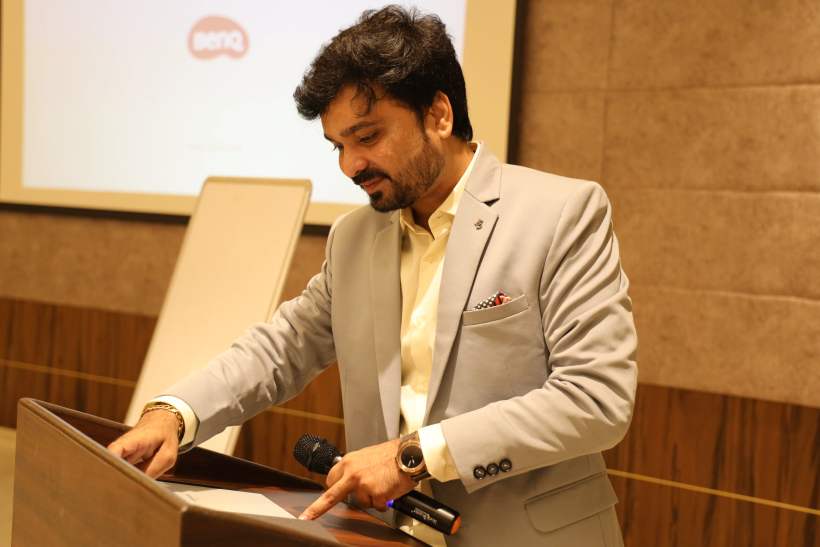
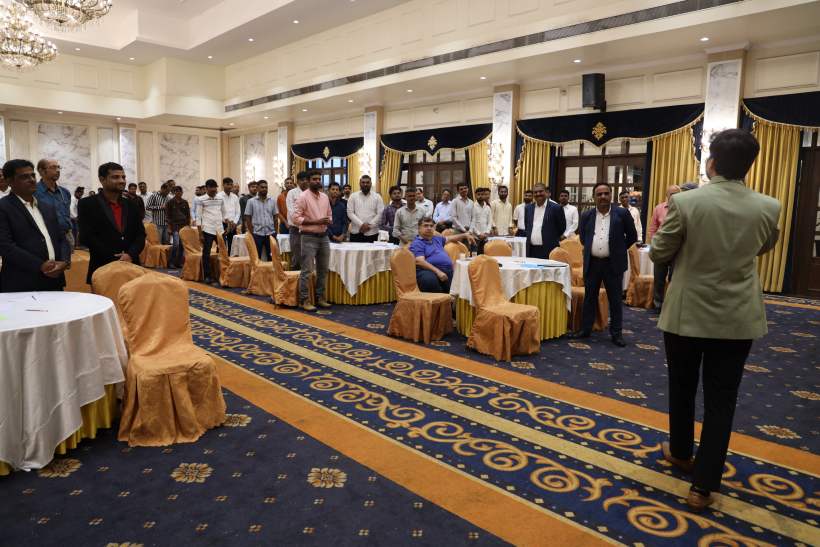
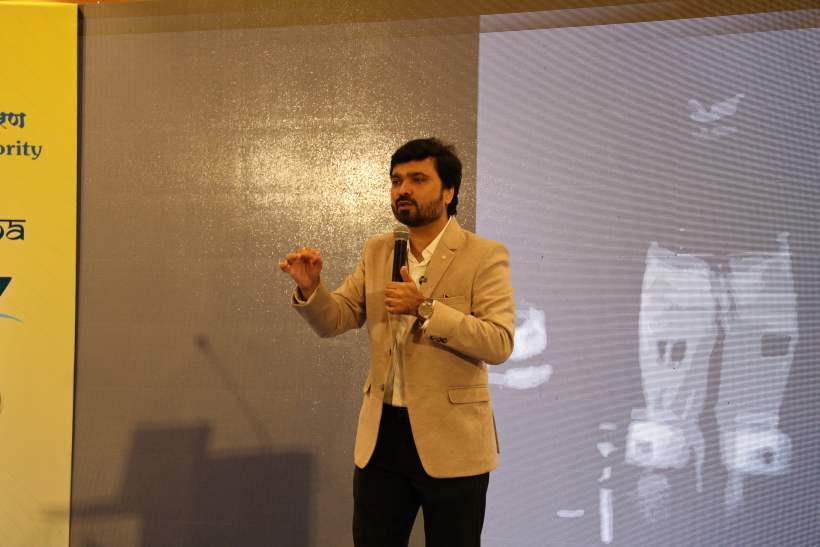
Photographs from Avinash Chate's own sessions in India. Sessions in this market are delivered by the same facilitator, in the same format.
Planning customer service training for your Dubai team?
Share your name and WhatsApp number and you will get a reply within one business day — usually the same day. Tell us the audience groups and the service failure you need fixed, and the outline follows.
Prefer to talk now? ☎ +91 87936 30001 · WhatsApp · Email
Sectors Served
Hotels, resorts and food and beverage operations across Dubai, Abu Dhabi and Sharjah, where recovery happens at a counter in front of other guests. Retail and mall operations, where the frontline turns over faster than the training cycle. Aviation, ground handling and travel services, where a service failure is usually somebody else's failure being met by your staff. Hospitals, clinics and diagnostics groups with largely Indian clinical and administrative teams, where the complaint is rarely about the medicine. Banking and financial services, including the professional firms in DIFC, which reported a workforce above 50,000 in its 2025 results, where service failure looks like a mail thread rather than a raised voice. Facilities management, logistics and contracting operations around Jebel Ali and JAFZA, where the customer is another business and the complaint arrives through a contract manager.
Frequently Asked Questions
How is an India-based trainer engaged for customer service training in Dubai?
The clean route is a direct engagement by your own learning and development or operations function, to train your own employees, on your own premises or at a venue you book. You brief the outcome, you approve the outline, and Avinash Chate is engaged as the named facilitator and flies in for the delivery dates. He is based in Maharashtra and travels for engagements: there is no UAE office, no UAE entity and no UAE licence. If your procurement prefers to contract through a locally licensed provider instead, that also works, with him named as the facilitator for every batch.
Who arranges the visa and the permission to work?
Your side does, because only a UAE-licensed entity can sponsor it. The usual route is the mission work permit issued by the Ministry of Human Resources and Emiratisation for short assignments, sponsored by the host entity, valid for up to ninety days, with any extension at MOHRE's discretion. Free zones including JAFZA and the Dubai Development Authority issue them through their own immigration portals, and your PRO files it as it would for an auditor or a commissioning engineer. A visit visa is not the compliant route for paid delivery.
How much lead time does a Dubai service programme need?
Four to six weeks is comfortable. That covers the scoping call, the written outline, your approval of the content, the permit filing and the flights. Three weeks is usually workable when the permit is already moving. Service teams add one scheduling constraint the office does not have, which is that the training has to sit around shift rosters rather than around a working day, so the batch plan is worth settling early.
Which days of the week actually work for training a service team in the UAE?
Monday to Thursday for the office-hours groups. The UAE federal government runs Monday to Thursday with a short Friday and a Saturday and Sunday weekend; private employers set their own week within the legal hours. Frontline service teams are the exception, because the customer-facing hours run through the weekend, so those batches are normally scheduled in the quiet part of the day rather than on a quiet day. During Ramadan the private-sector working day is reduced by two hours under UAE labour law, so a full-day format has to be re-cut into shorter blocks.
What group size works for a customer service workshop?
Eighteen to thirty. Service work is practised, not explained, so every participant has to run a recovery role-play out loud and be corrected on it. Up to about sixty is workable when the objective is a shared service standard rather than drilled skill. Beyond that it becomes a keynote with activity, which is a legitimate format for a service-week launch or an annual day and should be scoped as one rather than sold as a workshop. Large populations are usually better served by a batch series with small rooms.
Which languages are available for a frontline batch?
Delivery is in English, and English is the right room for supervisors, duty managers and the head-office service function. Where a frontline batch works better in Hindi, the same facilitator runs the same programme in Hindi rather than handing the batch to someone else, and Marathi is available as a third option. That is the part worth checking against any provider you shortlist: ask who the named facilitator is for each batch, and whether the supervisor session and the frontline session get the same person and the same material.
Can the programme run online instead of in person?
Partly. Online works for the service standard, the complaint-classification framework and short practice in breakouts, and it is a sensible first module for a team spread across Dubai, Abu Dhabi and Sharjah. It works badly for the parts that need a room: tone under pressure, body language at a counter, and the recovery role-play where somebody has to stay calm while another participant is deliberately unreasonable. Most programmes end up as a virtual opener followed by in-person practice days.
What does the proposal contain?
The outcome you named written back as a measurable objective, the batch and shift plan, a session-by-session outline, the role-plays and the service scenarios drawn from your own complaint log rather than from a catalogue, the language plan per audience group, the duration and format, the travel and permit requirements your side is arranging, and what happens after the session — the reinforcement material and the supervisor follow-through. You see the outline before anyone books a flight, and it also states plainly what the programme will not do.
Is there UAE tax to deduct, or UAE VAT to register for?
Under current UAE rules, withholding tax on payments to non-residents is set at zero where the income is not attributable to a permanent establishment in the country, so the invoice is settled in full with nothing deducted at source. Under the VAT reverse charge in Article 48 of the VAT decree-law, a VAT-registered UAE client accounts for the VAT on an imported service itself, which means no UAE VAT registration is required at this end. Your finance team should confirm both points against your own position before the purchase order is raised.
What does customer service training in Dubai cost?
There is no published rate card, because a half-day service-standard session for two hundred people and a four-batch frontline programme with supervisor follow-through are not the same purchase. A quote is built from the format and the number of days, the number of batches needed to keep rooms small enough to practise in, whether supervisors are trained separately from the frontline, and the travel, accommodation and permit costs your side is arranging, all quoted as separate lines so nothing is buried. Share the dates, the audience groups and the service failure you need fixed, and you get a specific written quote within one business day.
Plan Your Dubai Customer Service Programme
To scope it, share the audience groups and roughly how many people are in each, whether supervisors are trained separately, the emirate and the venue, your date window, and the one service failure the programme has to stop. Four to six weeks is comfortable and three is usually workable. A call follows within one business day, and you get a written outline before anyone books a flight.
Fixing service recovery in the UAE this year?
Complaint handling, recovery across a culture gap, and the supervisor behaviour that makes it stick — practised, not presented.
Check Date Availability →